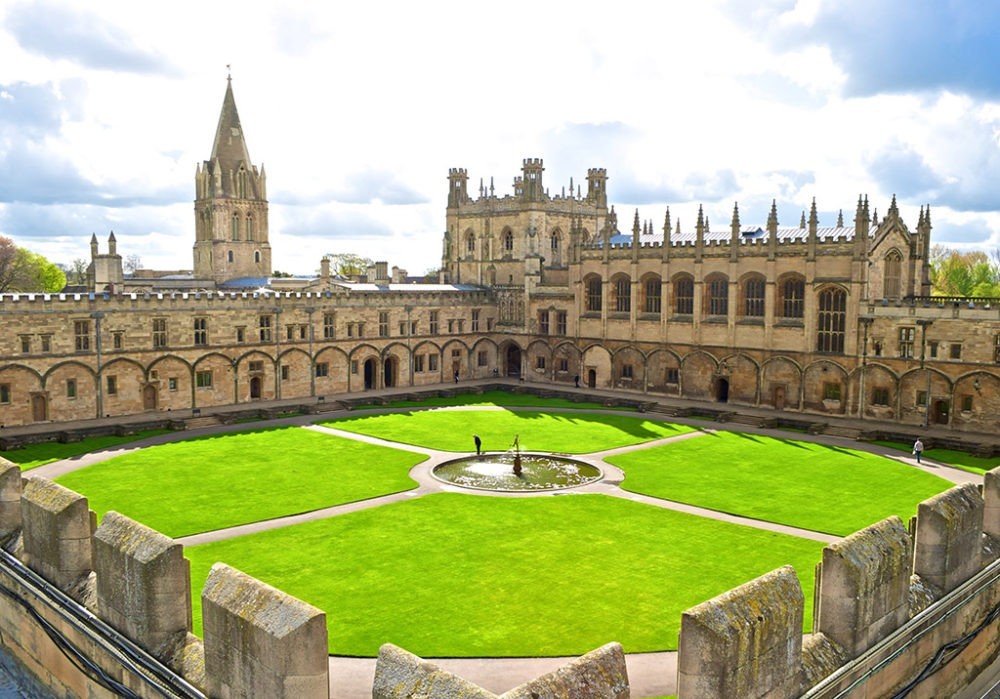
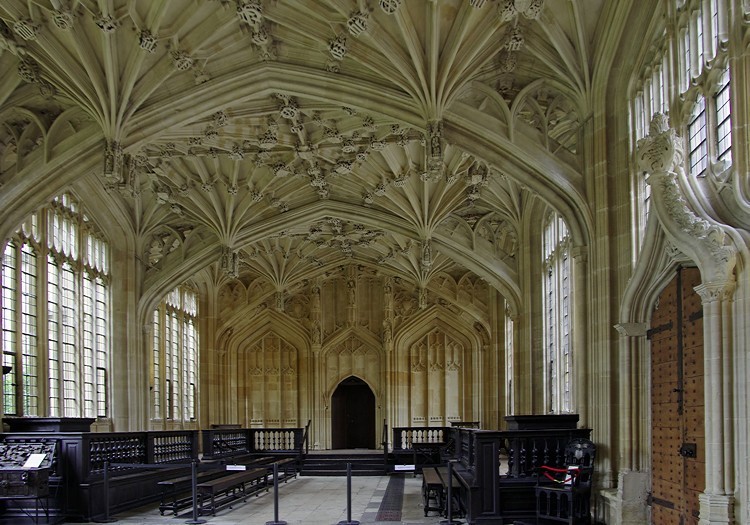
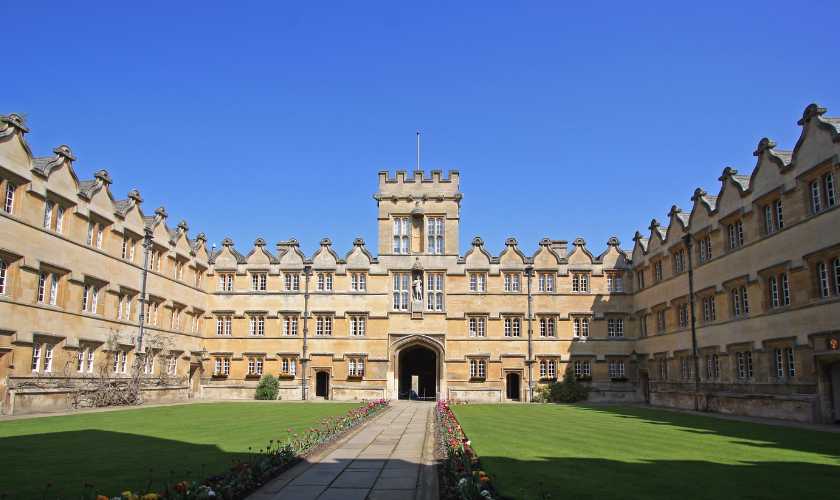
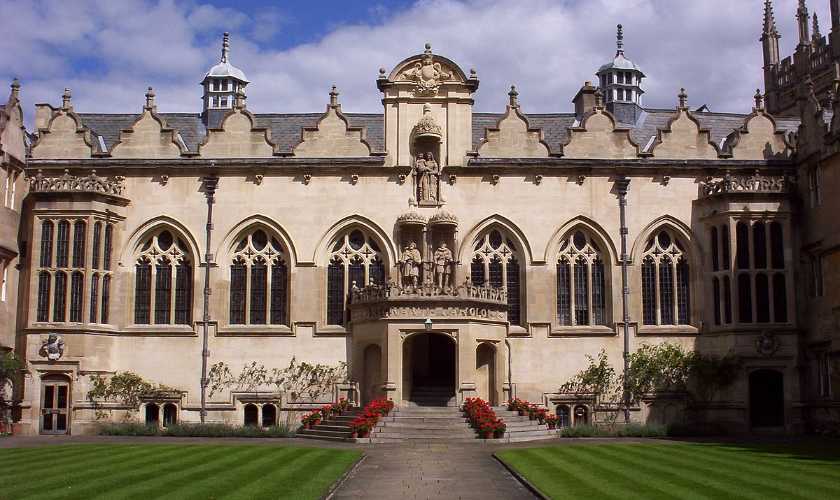
Studying at Oxbridge, the UK, and elsewhere

Summary of What You Need to Apply to Oxbridge from a US High School : 

  • You obviously need to be a top student, probably applying to top US schools.
  • You need lots of AP exams and perhaps SAT IIs with top scores, as well as meeting minimum SAT requirements.
  • You need to know exactly what you want to study. You need to have strong qualifications for that subject area, and you need to convince them you will learn using the tutorial  system.
  • ECs do matter when applying to Scottish universities, but not English.
  • For example, athletics doesn’t matter. Playing on a varsity team helps a lot applying to Ivies and is pretty much required for West Point. You also won’t get in because the coach wants you for a team.
  • Obviously, if you have relatively poor grades or ECs or are not considered well-rounded academically by US schools, Oxbridge or other British universities may be right for you.
  • You need to have or be able to obtain funds for tuition.

Applying to UK Universities

  • When you apply to UK universities, you submit a common application. You can apply to at most 5 schools, and you cannot apply to both Oxford and Cambridge.
  • You need one faculty reference. In England, this is usually from the equivalent of a guidance counselor, combining comments by different teachers.
  • This is much easier than in the US, where you need to send separate applications to every school, and people often apply to 10 or more schools.

High School Preparation and A-Levels

  • British students spend their last 2 years in high school studying 3 or 4 subjects.
  • Usually, they are related subjects, such as mathematics, physics, and chemistry, or English, history, and French, or mathematics, economics, and geography.
  • It is considered a disadvantage in applying to university if you take a mix of humanities and science; it does not help to be well-rounded.
  • A-level exams: graded A-E; the highest grade is A*. These exams are advanced, covering what is considered college material in the US.
  • The A-level exams are traditional (essay or problems, no multiple choice). AP exams are mixed essay and multiple choice, SAT and ACT are all multiple choice.
  • You cannot take A-levels in the US; British universities will often ask for AP exams instead.
  • Universities do not look at grades from their teachers.

Which Universities Accept SAT in the UK?

Students often ask which universities accept SAT in the UK, especially those applying from international or U.S. high school systems. While SAT scores are not a standard requirement for most UK universities, some institutions may consider SAT results as part of the application for international students, usually alongside other qualifications.

In certain cases, universities such as University College London (UCL), King’s College London, University of Manchester, University of Bristol, and University of Warwick may review SAT scores in combination with high school transcripts or additional exams. Requirements vary by course and applicant background, so students should always check official university admission pages.

Strong performance in Digital SAT Math can be especially helpful for applicants targeting competitive STEM or quantitative programs.

Testing Requirements and Department Applications

  • If you apply to British universities from the US, they are mostly interested in test scores. AP exams are generally most important, then SAT IIs, and then SAT Is or ACT .
  • When you apply to a British university, you apply to a specific department. At Oxford and Cambridge, it is the department that makes the decision. You will study only within that department
  • For US students, combined programs like PPE at Oxford are recommended, but single-subject study is fine.
  • Programs at Scottish universities allow you to decide your field of study later.

US Student Admission Statistics

  • About 30 US students from US high schools are admitted into Oxford or Cambridge every year.
  • By contrast, there are about 5000 freshmen at Harvard, Yale, and Princeton.
  • Oxbridge is generally easier for international students than top US schools.

AP and SAT IIs vs. A-Levels

  • Cambridge requires 5 AP exams with a score of 5 and 2100 combined SATs.
  • Strong applications include many AP exams with 5s and high SAT II scores.
  • 3 A-levels with A’s or B’s are roughly equivalent to 10+ AP exams.
  • International Baccalaureate is also accepted.
  • Some departments have their own exams (more in Oxford than Cambridge).

College Choice, Personal Statement, and Interviews

  • You need to pick a college; less prestigious colleges may increase admission chances.
  • The personal statement should be formulistic; emphasize why you want to study the field and prior reading.
  • Interviews are with faculty, sometimes over Skype, testing how you learn using the tutorial approach.

Tuition, Conditional Offers, and Scholarships

  • International tuition: ~$32K/year. UK universities do not provide financial aid, but other sources may help.
  • British students usually receive conditional offers based on predicted A-level scores.
  • American students with sufficient AP exams and SAT IIs may receive unconditional offers.

Applying to British Universities Other than Oxbridge

  • Apply to 5 schools to gauge standing.
  • London School of Economics is nearly as competitive as Oxbridge.
  • Lesser schools require simulating 3 A-levels via AP exams or SAT IIs.
  • Schools are generally accepting of qualified American students.


Studying in Scotland

  • St. Andrews: 10% US students; historic campus, aggressive marketing.
  • Scottish system closer to US system; structured programs but more flexibility than England.

Studying in Ireland

  • Top schools: Trinity College Dublin (TCD) and University College Dublin (UCD)
  • Easier for Americans to get into than top 30 US schools
  • Requirements for Americans: GPA and SAT I, not AP exams
  • Programs: combined degrees, picking two related subjects

Studying in Germany

  • Very rigorous; perfect German required
  • AP exams recommended
  • No tuition, even for foreigners
  • Less competitive than top US schools like MIT or Caltech
Studying Humanities at British Universities
  • Best programs at Oxford and Cambridge
  • English involves medieval literature
  • Some programs not available in the US (Anglo-Saxon, Norse, Celtic at Cambridge)
  • Humanities degrees more marketable in the UK than the US
  • US students may lack practical experience outside major
  • Advantage for career prep: professional schools in US
Studying Law or Medicine in the UK
  • Generally not recommended for US students
  • Medicine: 6-year programs; limited international slots
  • Law: 3-year LLB after high school; US practice requires LLM or US degree
  • Top AP/SAT scores needed if attempting medicine
  • US med school admission may be limited after UK study

guidance on preparing for the SAT, check out our comprehensive SAT resources page

Applying to British Universities other than Oxbridge

  • You get to apply to 5 schools. This will give you an idea of where they stand. British university rankings. If you are applying from the US, you may not need the safes that a British student does as you have other alternatives.
  • London School of Economics is almost as hard to get into as Oxbridge.
  • Less competitive schools are more concerned that you simulate 3 A-levels, preferably in fields related to what you are applying to study. You can do this with AP exams or SAT IIs. There is only one A-level in fields like physics and history, but many AP exams and SAT IIs. You can only count one exam in those areas. However, submitting a whole bunch of AP exams and SAT IIs in those fields if you are applying to something related at Oxbridge should help your application.
  • Lesser schools tend to want to take Americans, as they do better with students paying full fees.
  • For schools besides Oxbridge, and particularly for those not at the top level, if you meet the qualifications, you generally get accepted. They do not do holistic evaluations as in the US.

St. Andrews has about 10% students from the US. They have been aggressive about marketing.

  • Advantages are a prince went there and the campus with old stone buildings.
  • Many highly ranked British universities are 100 or less years old, newer than comparable US universities, and have “red brick” or even “plate glass” architecture.
  • So you can get some of the Oxbridge experience, old campus and traditions, adventure, and some of students from British upper crust, without being one of the few people who can get into Oxbridge.
  • Also, the Scottish educational system is closer to the US system than the British system is.
  • For schools besides Oxbridge, and particularly for those not at the top level, if you meet the qualifications, you generally get accepted. They do not do holistic evaluations as in the US.

Studying in Ireland

  • The top school are Trinity College Dublin and Univeristy College Dublin
  • TCD Trinity College Dublin is Church of Ireland and UCD University College Dublin is Roman Catholic, but those distinctions are not that important any more
  • TCD has an old campus and lots of history associated with it.
  • UCD is almost at the level of TCD
  • It has very practical programs, particularly in STEM subjects.
  • It has various programs in Irish subjects, such as literature in Irish and Irish folklore.
  • These schools are easier for an American to get into than top 30 US schools. They are excellent schools, but the competition of local students wanting to get in is not that great, and they want money from foreign students. Again you need to be able to pay.
  • Their requirements for Americans are more GPA and SAT Is, rather than AP exams.
  • They have structured programs as in the UK, but have more combined degrees in subjects. At both schools you can pick two subjects sort of related and study both.

Studying in Germany

  • It is sort of what you would expect, very rigorous.
  • Need perfect German, close to a year of study after German AP exam.
  • It is similar to the UK in that they want AP exams.
  • A lot of people fail, and there are no support services.
  • Although, it is rigorous, I am not sure if any of the schools are as competitive as top 30 US schools, certainly not MIT or Caltech.
  • This is actually a really popular option though, because as I understand it there is no tuition, even for foreigners.

Studying humanities at British universities

  • In my opinion good humanities, particularly at Oxford and Cambridge
  • English at Oxbridge involves studying large amounts of medieval literature
  • This is different from the US, where English majors often study mostly 19th and 20th century novels.
  • There is less difference in say classics, where US programs are more solid
  • There are some cool programs not available in the US, such as Cambridge University’s Anglo-Saxon, Norse, and Celtic
  • Involves studying various medieval British languages, literature, and history.
  • Humanities degrees, particularly from Oxbridge and other top schools, are more “marketable” and respected in Britain than the US
  • As a US student, there is a disadvantage that you don’t study anything “practical” outside your major.
  • Advantage for career is in the US, you can apply to professional school in law, business, journalism or other fields.
  • A UK degree, particularly from Oxbridge, probably provides you better preparation for graduate school in whatever you want to study.

Studying law or medicine in the UK

  • To summarize, this is generally not a good idea.
  • British students apply to law or medicine out of high school.
  • Obviously, it is generally harder for a British student to get into medicine or law at a particular university than humanities.
  • Medicine is a 6-year program. In the US, there are some 6 or 7 year BS-MD programs, but that is not the norm.
  • Cambridge does have a 4-year graduate medicine program, with almost all international students.
  • The 6-year programs have tight quotas for international students and are almost impossible to get into.
  • If you have extremely strong credentials in terms of AP exams and SAT IIs in math and science, particularly biology and chemistry, it might be worth a try applying to British medical programs out of high school.
  • Advantages are you are in, no premed. Also, 2 fewer years to MD.
  • Would get foreign med school degree, which could be associated with what students do who cannot get into a US medical school.
  • Only half of US citizens studying abroad get internships in the US, and they generally don’t get “good” ones. You might have a better chance from a British school than an obvious school for US students, but it isn’t an ideal situation if you want to practice in the US.
  • Going to a British university as premed has some problems. This really doesn’t work, as US medical schools will not accept you without 3 years undergraduate at a US or Canadian college.
  • So you could really only go to some med school in the Caribbean or something geared to US students. You would pretty much have to study biochemistry to have the courses medical schools want .and be prepared for MCATs. Biology would not work well.
  • On the plus side, you would probably get better preparation from a top British school.
  • You would avoid crazy US premed environments, studying with almost no premeds.
  • In Britain, you study law for 3 years after high school and get an LLB
    That used to be the system in the US, but more and more people graduated college or had some college first.
  • You can be accepted at a British law program out of a US high school, but there are problems with this.
  • Most states will not allow you to practice without an undergraduate degree or without a US law school degree.
    British law is different, so it would require a lot of study to pass the bar exam.
  • It does require 4 years less study, but there are advantages to getting an undergraduate education.
  • If you do this, it would probably be best to follow it with an LLM from a US law school.

FAQ Section

Q: How many APs do I need for Oxford?

A: Cambridge recommends 5 AP exams with 5s.

Q: Can US students apply to Cambridge?

A: Yes, via AP exams and SAT I/II scores.

Q: What SAT score is needed for Oxbridge?

A: Around 2100 combined SAT I.

Q: Do UK universities care about GPA?

A: Not for US students; AP and SAT scores are prioritized.
Studying at Oxbridge, the UK, and elsewhere
Oxford admission requirements
Can American students apply to Cambridge
How hard is it to get into Oxford from the US
How many AP exams for Oxford or Cambridge
How to apply to Cambridge from the US
UK university requirements for American students
Cambridge admission requirements
What SAT score is needed for Oxford
A-levels vs AP exams
How to apply to Oxford from the US
Studying at Oxbridge, the UK, and elsewhere
How hard is it to get into Oxford from the US
How many AP exams for Oxford or Cambridge
How to apply to Cambridge from the US
UK university requirements for American students
Cambridge admission requirements
What SAT score is needed for Oxford
A-levels vs AP exams
How to apply to Oxford from the US
Studying at Oxbridge, the UK, and elsewhere
How hard is it to get into Oxford from the US
How many AP exams for Oxford or Cambridge
How to apply to Cambridge from the US
UK university requirements for American students
Cambridge admission requirements
What SAT score is needed for Oxford
A-levels vs AP exams
How to apply to Oxford from the US

Studying at Oxford, Cambridge, and elsewhere in 2024.

ACT math preparation with expert tutor guiding practice problems